
People repaint a room for a few reasons. The paint gets old and the walls pick up scuffs and dings. They want a different colour. Or something has gone wrong, like paint bubbling near a window or a water mark that keeps coming back.
Here are five signs a room is ready for paint, what causes each one, and how to check your own walls.
- Old, scuffed paint is reason enough to repaint, even when nothing has failed.
- Wanting a new colour is reason enough.
- Bubbling, peeling, stains and mildew are different: the cause gets fixed first, or new paint fails the same way.
- There's no fixed repaint schedule. The condition of the walls matters more than the date.
5 signs your home needs interior painting
1. The walls just look tired
Scuffs along the stairs, worn patches beside door frames, marks on the wall around light switches, dents and chipped corners. Walls that have been scrubbed often can look patchy or shiny in spots. Nothing has failed. The paint is old, and it shows.
There's no set number of years for this. Home inspectors (InterNACHI) put the life of interior paint at 10 to 15 years when the prep and the paint are good, but that's how long it takes paint to fail. Busy rooms usually look tired well before then. Kitchens, hallways, kids' rooms and trim get touched and cleaned the most, so they show it first, while a quiet bedroom can go much longer. If you can't remember the last time a room was done, the check below will tell you more than the calendar.
2. You want a new colour
Sometimes nothing is wrong at all. The colours feel dated, or you're ready for something different, and that's reason enough. There is no wrong way to pick a colour. Some clients arrive with a code, some take a photo of a house down the street, some want us to narrow it down with them. You don't need colours picked to book.
3. Faded or uneven colour
Sunlight fades paint, and in our part of the world the walls near big south- and west-facing windows get the most of it. You usually notice when you move a picture or a piece of furniture and see the original colour behind it.
4. Stains, water marks or mildew
If a water mark or a brownish stain keeps coming back, or shows through a fresh coat, it's usually coming from moisture or wood behind the paint, not sitting on top of it. Sherwin-Williams' fix is to deal with the cause, then seal the stain with a stain-blocking primer before painting.
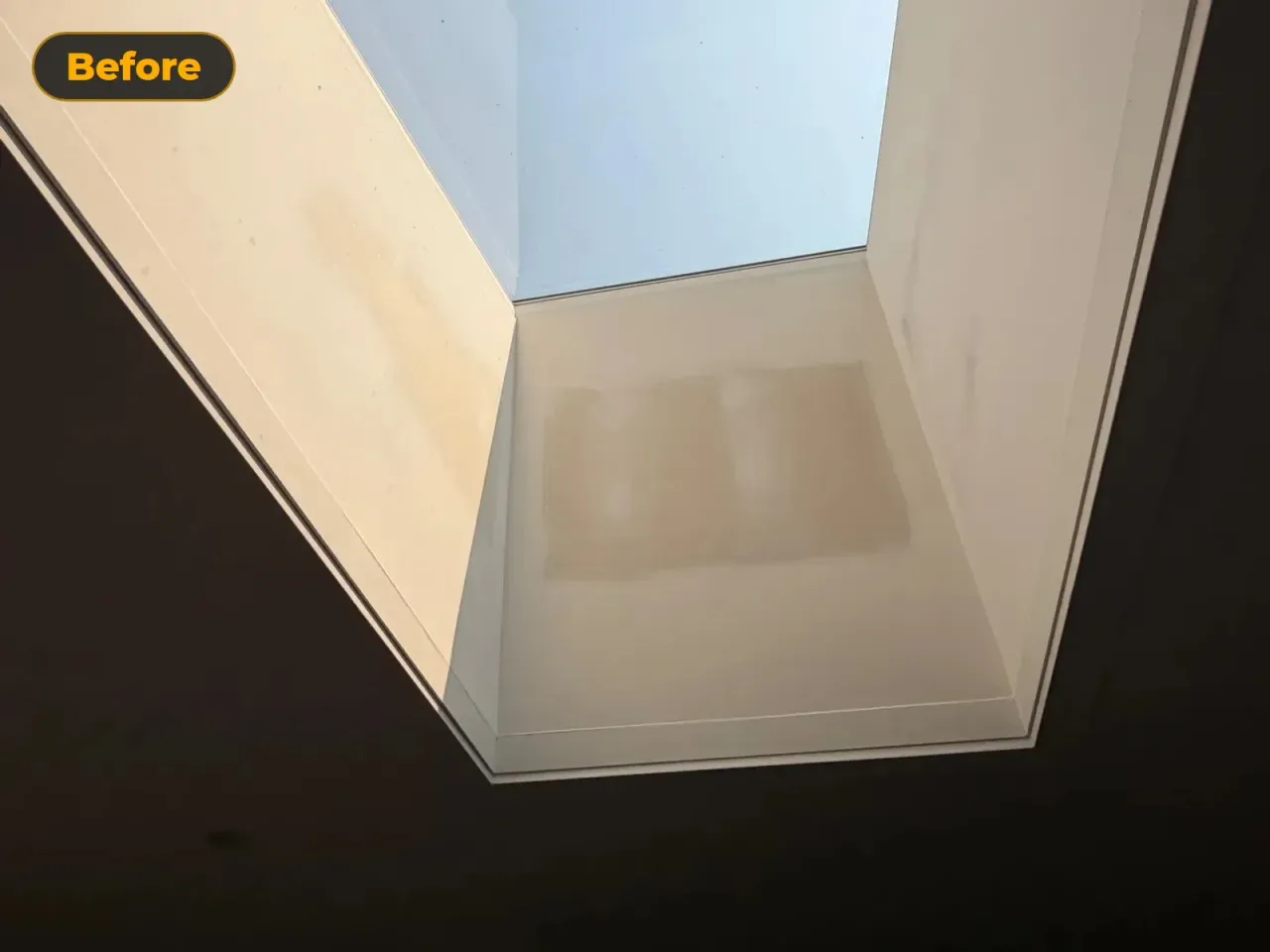
Before: this is a skylight well on a ceilings job we did in Tsawwassen, as we found it, with stains and a patched section of bare drywall.
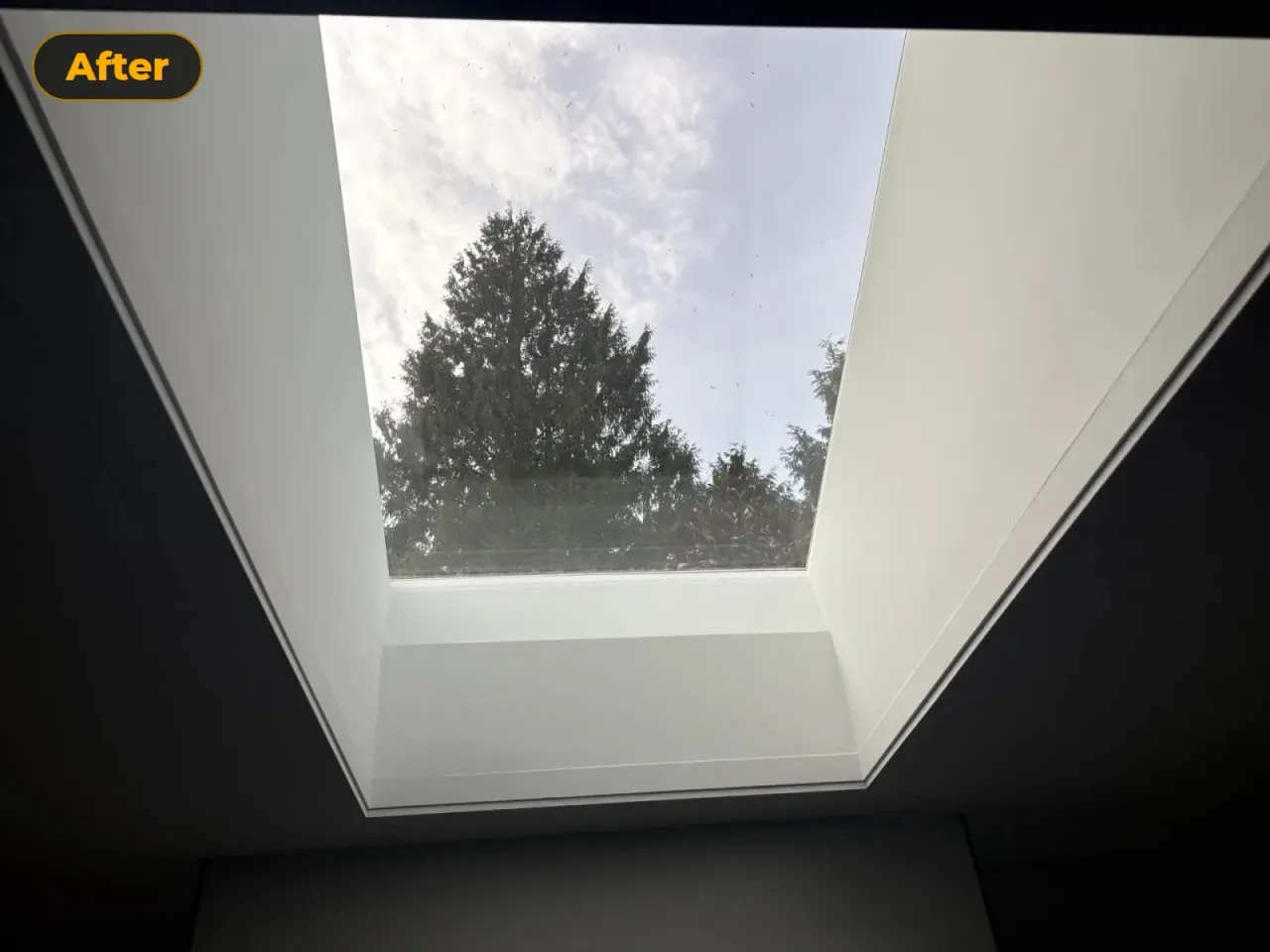
After: the bare drywall was primed first, then the whole skylight well was painted.
Mildew (the grey or black spotting in bathrooms and window corners) is different. It's a growth, and it keeps spreading under new paint. Sherwin-Williams' advice is to clean it off first (they suggest one part bleach to three parts water), rinse, let the wall dry, sort out the ventilation, and use a mildew-resistant paint in the bathroom.
5. Paint that bubbles or peels
Bubbles and peeling mean the paint has come away from the wall. It's usually moisture, sometimes poor prep when the wall was last painted. It shows up most near windows and in bathrooms, kitchens and laundry rooms, where there's moisture every day. Sherwin-Williams names steam from showers and cooking, and poor ventilation, as common causes. Painting over it won't hold. The moisture gets fixed first, the loose paint comes off, and then the wall is prepped and repainted.
How to check your walls in ten minutes
- Wipe any stain with a damp cloth. If it comes back within days, it's coming through from behind.
- Around any peeling spot, press a strip of masking tape firmly onto the paint and pull it off. If paint comes away on the tape well beyond the peeling patch, the paint has lost its grip over a wider area than you can see.
- Lift a picture or move a piece of furniture on a sunny wall and compare the colour.
- Look at the window corners and the bathroom ceiling for spotting, and check that the bathroom fan works.
- Run your hand along the stair wall and around light switches and door frames for scuffs, dents and chips.
Touch up or repaint?
Touch-ups work best on paint that went on in the last year. On older walls the patch usually shows, because the paint around it has faded or picked up a slight shine. Darker colours and paints with any sheen are the hardest to touch up. Once a wall needs more than a few touch-ups, it looks better painted corner to corner.
Why it starts at the windows and in the bathroom
Interior paint doesn't wear out from the rain outside. It's the moisture from daily life (showers, cooking, drying laundry) that does the damage. In winter that moisture condenses on cold window glass and cold corners of outside walls, which is why bubbling, mildew and dark marks so often start beside a window or in a bathroom with a weak fan.
Our winters are damp. At Vancouver International Airport on Sea Island, afternoon humidity averages about 80% from November to January, against about 61% in summer, and November is the wettest month, with rain on about 20 days (Environment Canada's 1981 to 2010 climate normals).
Paint protects the wall's surface from wear and lets you wipe it clean, but it doesn't keep moisture out of the wall. Running the bathroom fan, airing out the room and fixing leaks do more for your walls than any paint can.
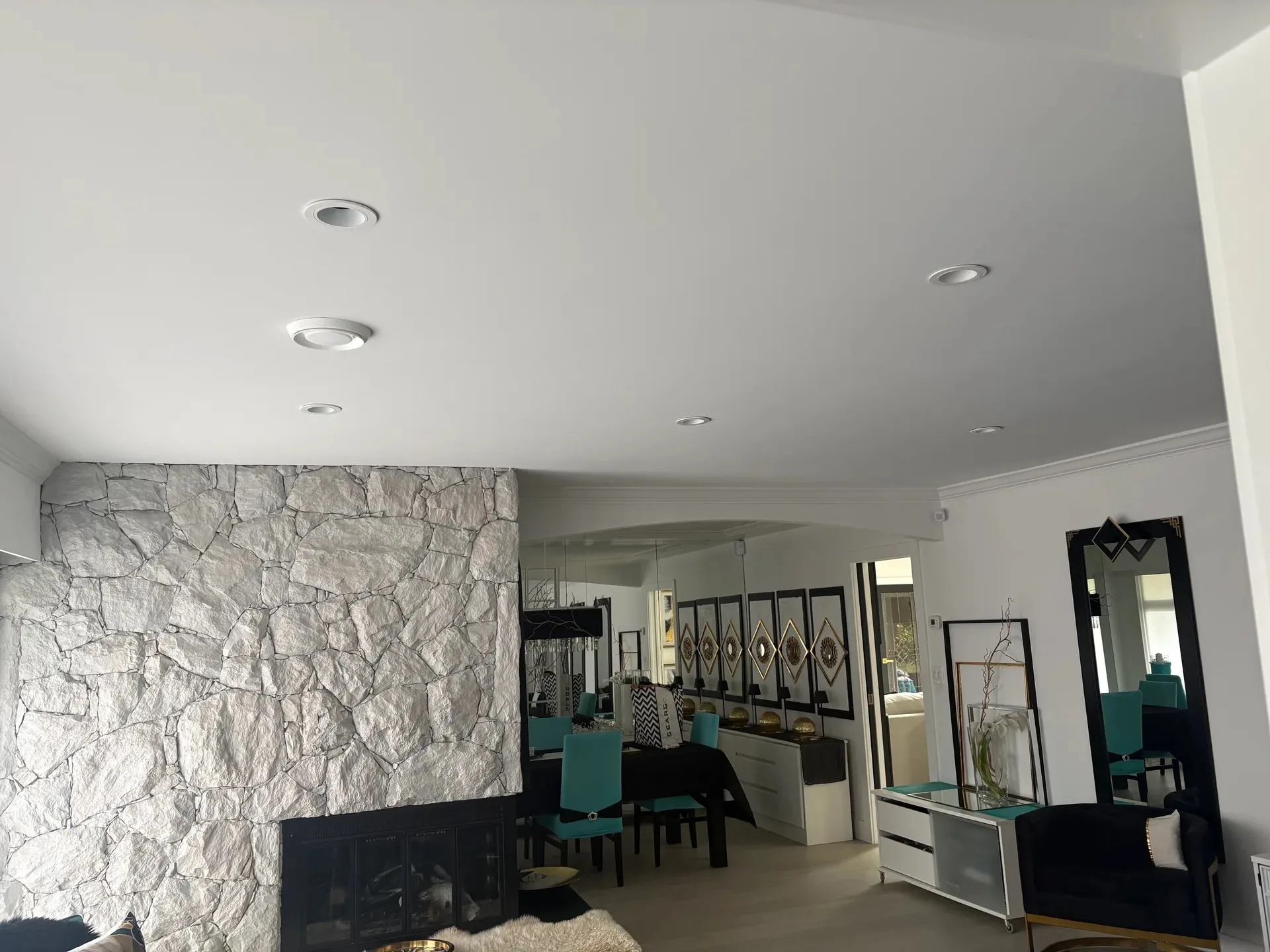
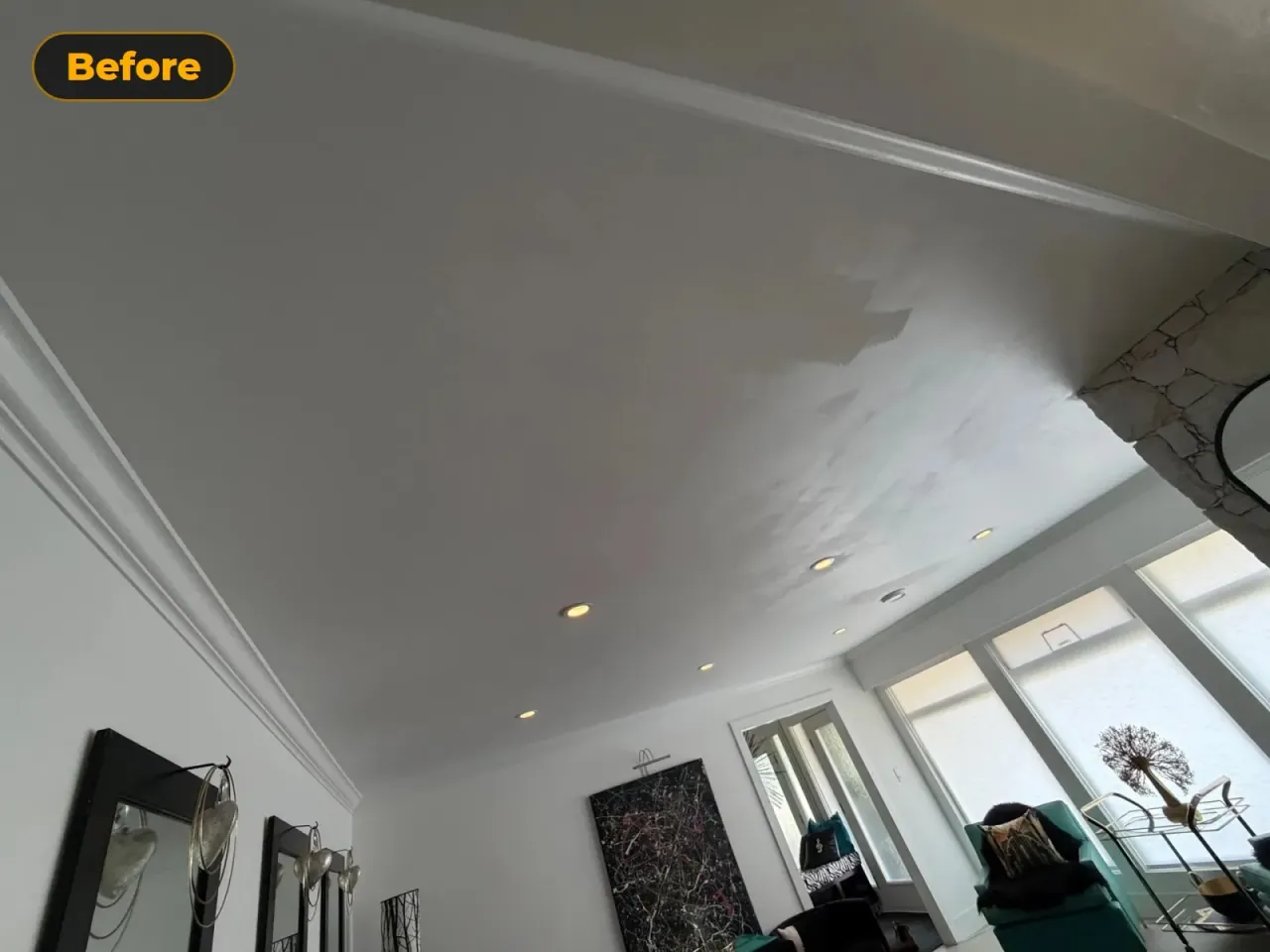
Before: the living room ceiling on the same Tsawwassen job, with stained patches.
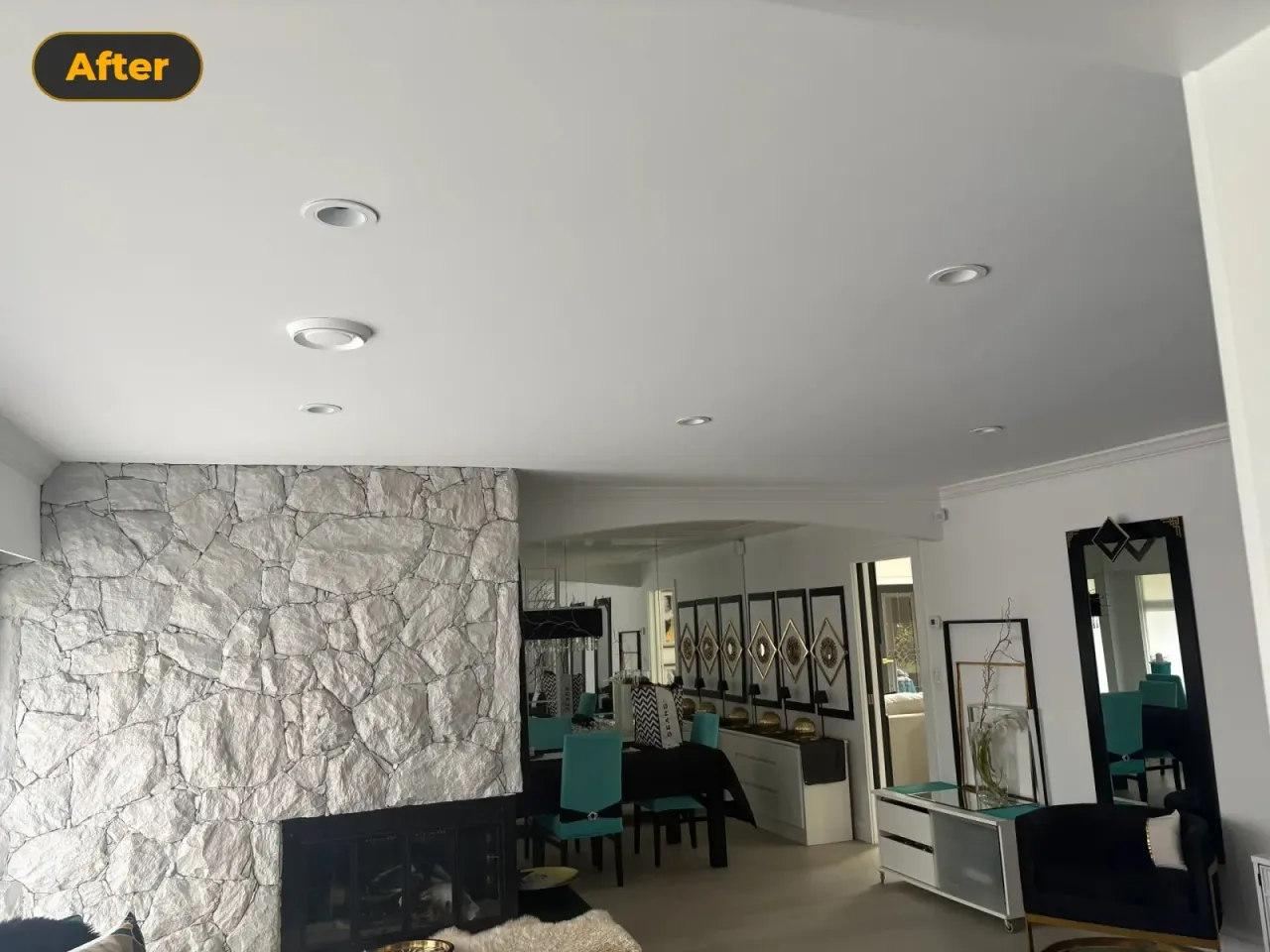
After: the same living room, with the ceiling repainted.
Frequently asked questions
How often should interior walls be repainted?
There's no fixed schedule. Home inspectors put interior paint at 10 to 15 years with good prep and paint, but busy rooms like kitchens and hallways usually look tired well before that, and quiet bedrooms can go much longer. The signs above are a better guide than the date.
Will new paint fix peeling, stains or mildew on its own?
No. Peeling comes back unless the moisture causing it is fixed, stains bleed through unless they're sealed with a stain-blocking primer, and mildew keeps growing under new paint unless it's cleaned off first.
What are the brown or tan drips on my bathroom walls?
Usually not a paint failure. Sherwin-Williams explains that when a fresh coat of latex paint gets steam or water before it has fully cured, some of the paint's ingredients can rise to the surface and leave sticky tan or brown drips. They're cosmetic and wash off with soap and water. Letting new paint cure before the room gets steamy, and running the fan, prevents them.
Which paint finish (sheen) should I use in each room?
It depends on the room and how much wear it gets. Our guide to choosing your paint sheen goes room by room.
How much does interior painting cost in Richmond and Delta?
It depends on the size of the rooms and how much prep the walls need. Our interior painting cost guide for Richmond has the ranges, and a free estimate gives you a written price for your home.
What happens at the estimate
Book online or call. We visit and go through what you want painted, and most of the time you have your written quote on the spot. If not, it follows within 24 hours.
Drop cloths go down before brushes come out. Cleanup happens at the end of every workday. Every project backed by our 2-year written warranty.
See recent interior jobs: the multi-colour interior repaint in Seafair and the bathroom and foyer repaint in Seafair. More on interior painting in Richmond and in Delta.
Seeing these signs at home?
Book your free estimate and we'll go through the rooms with you.
Related Services & Locations
Ready to Transform Your Home?
Get a free, no-obligation estimate from your local Colour Craft team. Licensed, insured, 2-year warranty.